The State Academic Puppet Theatre is the first puppet theatre in the history of the Republic. It was founded in 1935 and has since made a significant contribution to the development of national culture and theatrical art. Today, the theatre successfully participates in international festivals, winning prizes and continuously improving its artistic mastery.
In today’s interview, we would like to discuss the current development of the puppet theatre, its creative direction, and future projects.
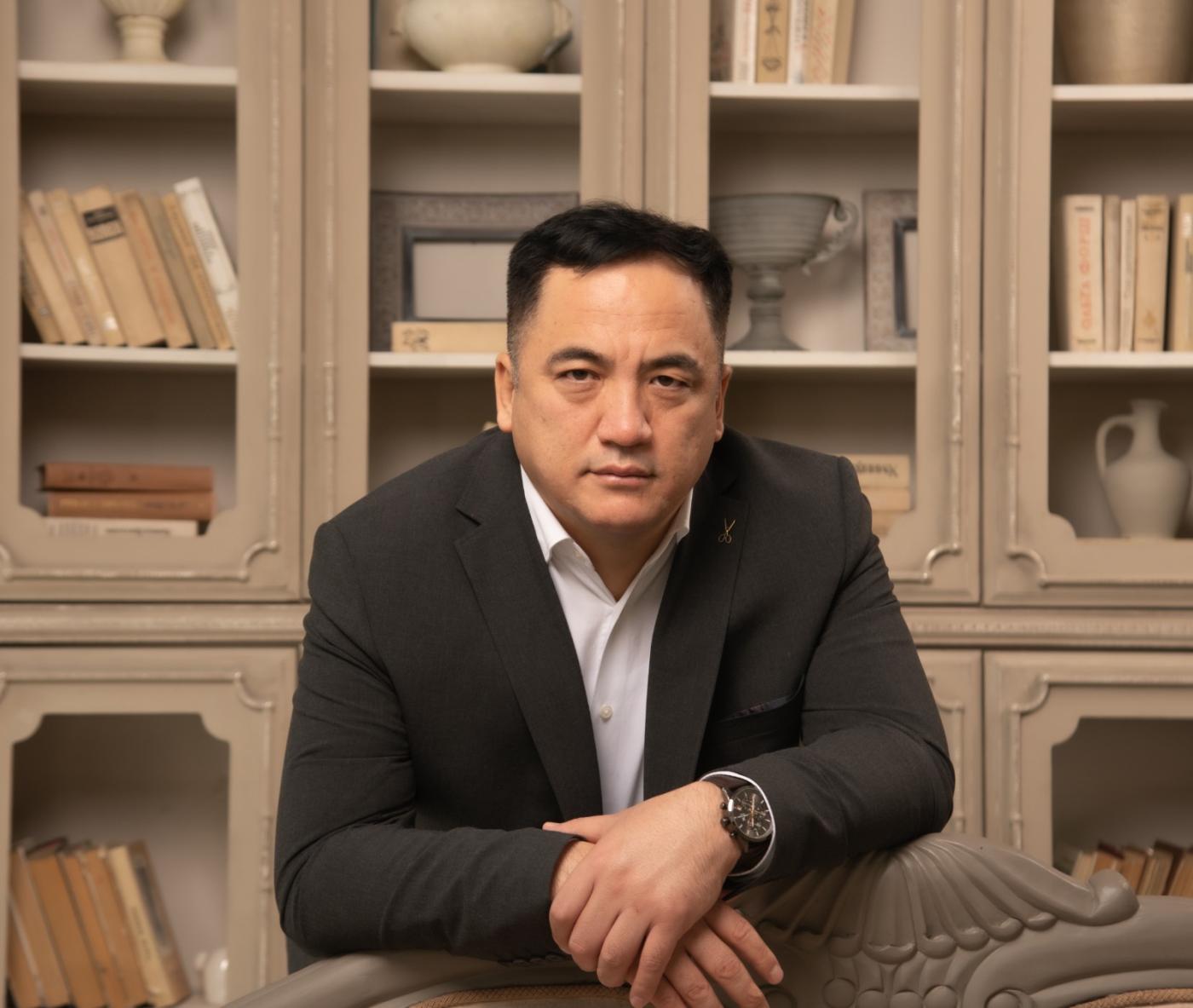
— Hello, Mr. Almat Amangeldi! Thank you for taking the time to join us for this interview. You have been working at this theatre for nearly five years, and under your initiative, international-level projects have been implemented. Could you tell us more about this?
— For an audience that deeply understands the value of art and seeks spiritual nourishment from the stage, the puppet theatre holds a special place. During my nearly five years of work here, I have come to deeply understand its life, creative potential, and connection with the audience. Puppet theatre is one of the most delicate and mysterious forms of art. It not only inspires children’s imagination but also touches the inner world of adults. Therefore, I consider it my civic and creative responsibility to bring this art to the international level.
In today’s world, culture is a golden bridge connecting nations, and puppet theatre is one of its most important pillars. With this understanding, we have initiated projects aimed at strengthening international cooperation, exchanging experience, and expanding the horizons of Kazakh art. The largest among them is the International “Almaty Puppet Festival,” held since 2023. In its first year alone, it attracted significant interest, bringing together 14 theatre companies from Bulgaria, Georgia, Poland, Turkey, Uzbekistan, and Kazakhstan. Each performance showcased unique artistic styles and national identities, turning the festival into a platform for cultural dialogue.
In 2024, the festival expanded further, featuring theatres from China, Turkey, Russia, Poland, the Czech Republic, Bulgaria, Uzbekistan, Azerbaijan, Georgia, and Bashkortostan. In 2025, 14 creative groups from 11 countries participated, including Kazakhstan, Turkey, Russia, Spain, Italy, Bulgaria, Iran, Azerbaijan, India, Uzbekistan, and Kyrgyzstan. Alongside performances, workshops, creative meetings, and discussion platforms were organized.
Participation in international festivals is also an important part of the theatre’s work. The troupe has successfully performed in Canada, France, Bulgaria, Turkey, Georgia, Russia, Belarus, Kyrgyzstan, and Tajikistan, earning prestigious awards.
Through the silent language of puppets, we convey universal human emotions, building bridges from heart to heart. Each performance represents the soul of a nation, the voice of an era, and the destiny of art. In the future, we aim to continue this work, further developing the festival and strengthening its position in the global cultural space.
— What makes this festival unique compared to others?
— The International “Almaty Puppet Festival” has its own distinctive concept, which can be divided into three key directions. First, it is a creative laboratory where masterclasses and lectures by leading world puppet theatre experts are held. We do not limit ourselves to performances; we also create a professional educational environment. Second, it is an important tool of cultural diplomacy and tourism development for Almaty. The festival introduces guests to the city’s history, nature, and hospitality. Third, it is the formation of a unique brand and the development of the creative industry. We produce souvenir items with national motifs, promoting our cultural identity. Thus, the festival combines Western innovation with Eastern tradition.
— In 2023, the theatre underwent renovation. What changes were made?
— In 2023, large-scale renovation works were carried out. The main goal was to create a modern and comfortable environment for both audiences and the creative team. The foyer was fully renovated, the stage was modernized and its technical capabilities expanded. The auditorium was equipped with new comfortable seating. Rehearsal rooms, dressing rooms, and utility spaces were also upgraded. Modern lighting and sound systems were installed, significantly enhancing the theatre’s artistic possibilities.
— The theatre recently celebrated its 90th anniversary. What major projects were implemented as part of the jubilee?
— Our theatre’s history dates back to October 10, 1935. For the 90th anniversary, several important projects were realized. A museum was opened inside the theatre, featuring more than 200 exhibits, including historical puppets, awards, and archival photographs. A book titled “A Theatre with Deep Roots: Tracing 90 Years” was also published. The premiere of the performance “Orteke” took place. In addition, the III International “Almaty Puppet Festival” was held. One of the greatest achievements was the awarding of “academic” status to the theatre.
— Do you plan to continue collaborating with foreign directors?
— Yes, we already have successful experience in this area. For example, we have worked with Georgian director Nikoloz Sabashvili, who staged the productions “Who Am I?” and “The Overcoat.” These performances received high acclaim from both audiences and critics. We plan to continue collaborating with international directors and further develop creative partnerships.
— What opportunities does the theatre offer to young directors and artists?
— We actively support young professionals. The theatre provides conditions for creative experimentation and professional growth. For example, Bolat Momynzhanov and Aliyar Nuradil successfully made their directorial debuts. In addition, theatre staff are trying themselves in various creative roles such as directing, scenography, and dramaturgy. New premieres are expected soon, demonstrating the theatre’s openness to new ideas and initiatives.
— Thank you for this insightful interview!
— Thank you!
Shugyla Dalibayeva